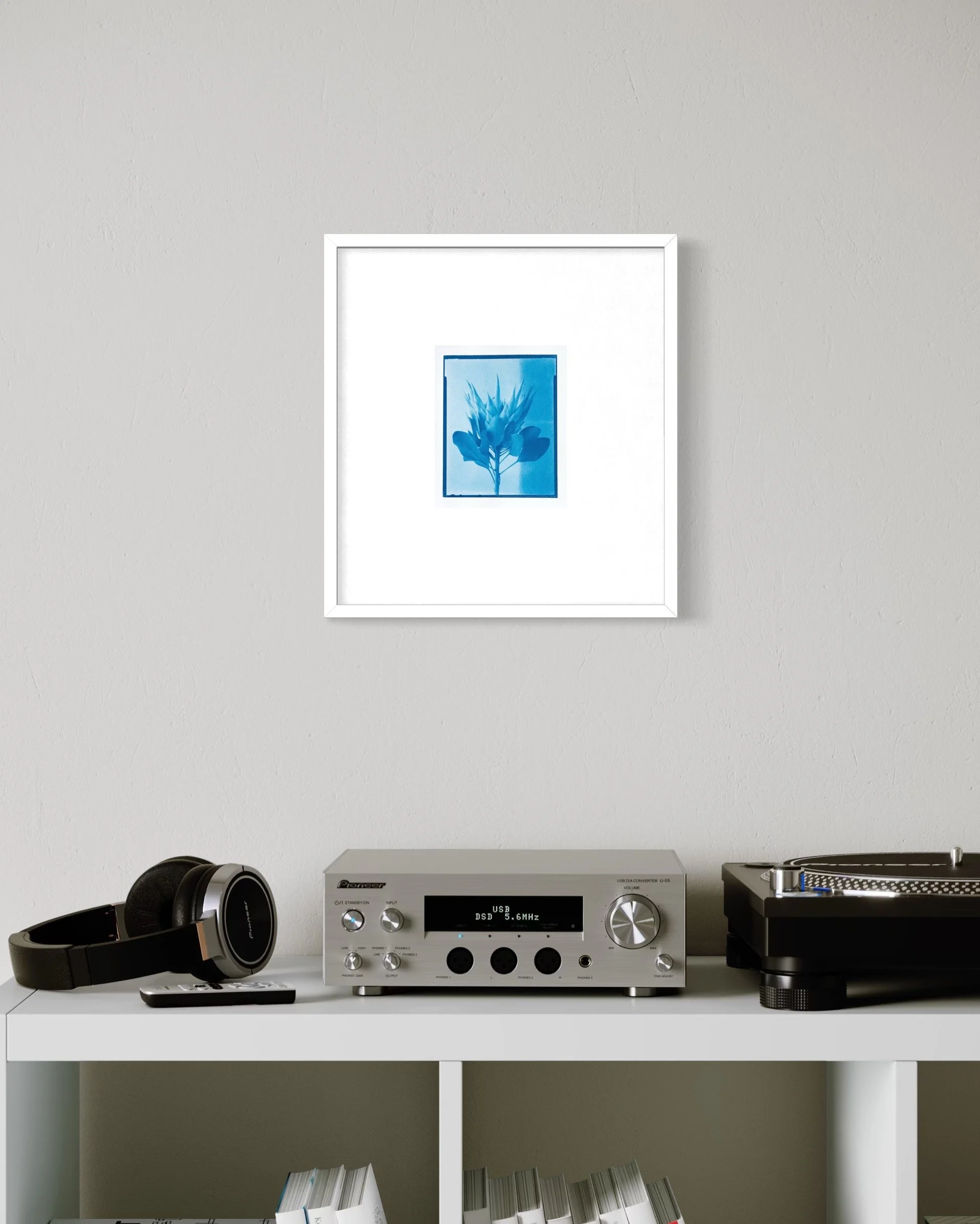
King Protea Cyanotype | Time Limited Edition




King Protea Cyanotype | Time Limited Edition
Time Limited Edition Print. Available only until November 30th, 2025.
The final edition number will be confirmed once the sale period closes. The total number of prints will be produced, signed, and shipped in early December to arrive for the holiday season.
These cyanotype prints will only be offered during this limited time release. After which the negative will be destroyed.
Image Size: 10×12.5 cm, 4×5 in | Paper Size: 25×33cm, 10×13in
*Free domestic and international express shipping for editioned prints.
King Protea, 2025
Part of a family of flowers over 300 Million years old, predating bees by 180 million years.
This Cyanotype of a King Protea is an extension of ‘Fossil’ a series of images that explores the human mind's struggle to grasp the vastness of time and our fragility within it. The collection features prehistoric plants that evolved before the existence of bees, serving as tangible reminders of our temporal limitations. Unlike stone fossils, which often feel distant and abstract, these living fossils offer a tactile immediacy. They highlight the dual nature of life - its persistent drive to survive alongside its inherent fragility.
Created using a 4 × 5 inch large format negative on 100% cotton fibre Bergger Cot paper. Due to the handmade process, each print is unique, possessing its own distinct characteristics, making every print a unique photographic art object. The beauty of this technique lies in the individuality of each print bearing its own unique character.
Contact printing involves creating a negative, which in this case was captured with a 4×5 large format camera and developed in studio. The sensitiser is then applied by hand and dried. The negative is placed directly on the emulsion surface and exposed to UV light. The print is then washed, revealing the final image.
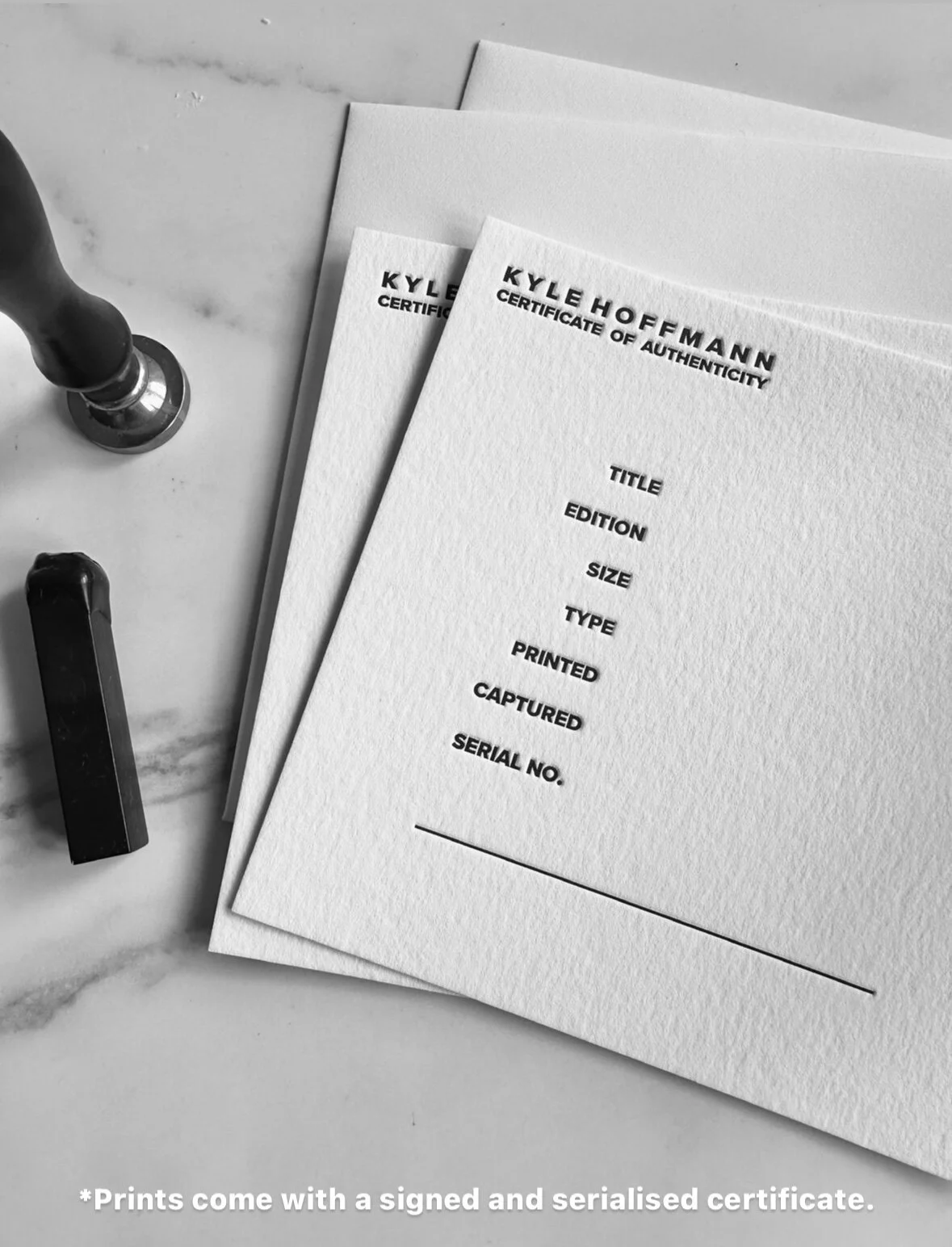
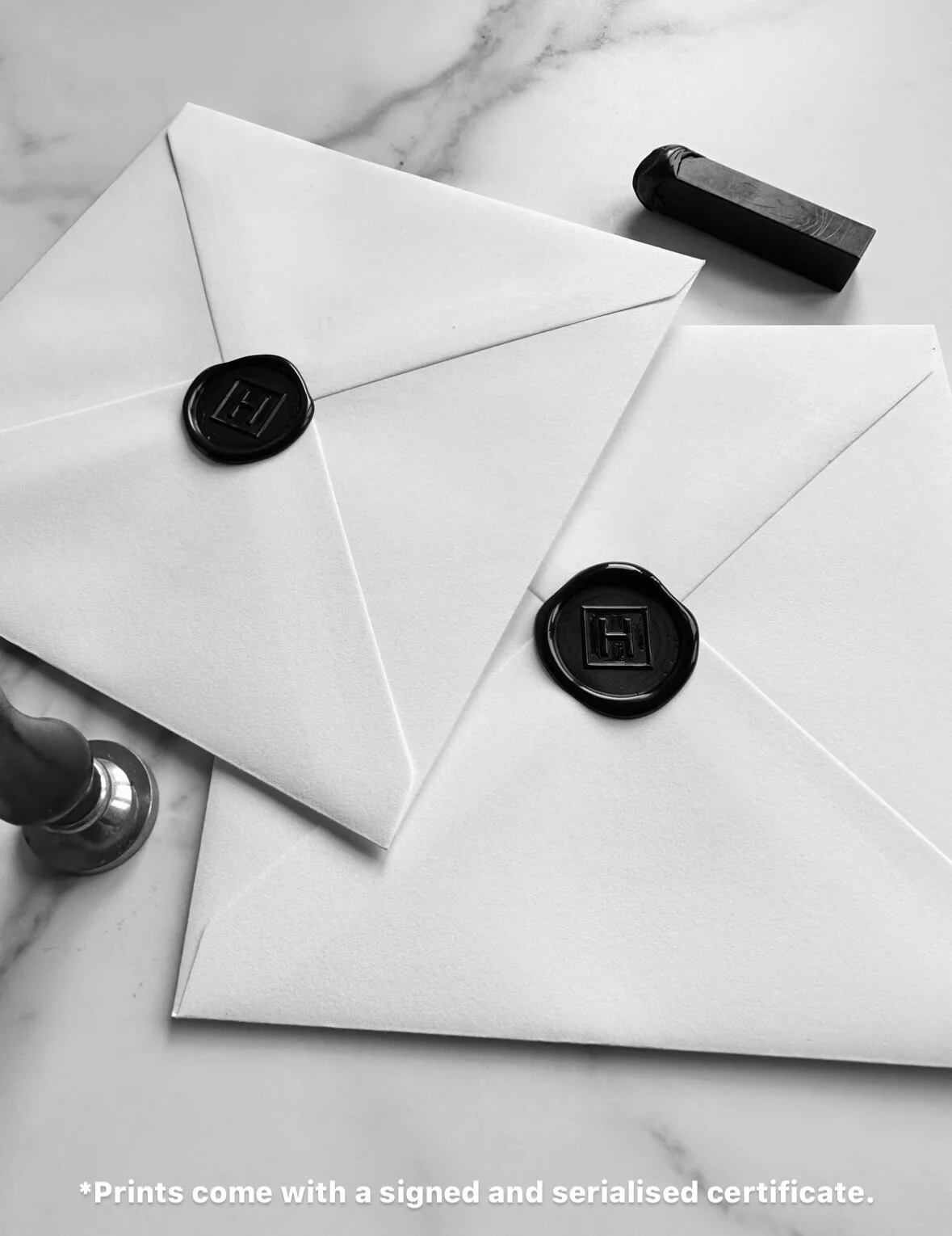
Each editioned print is signed with penicil on the front and back is signed, dated, and serialised. This information is also reflected on a certificate of authenticity.